
Mom life famousparenting is ordinary U.S. motherhood treated as worth documenting, not a celebrity title. It names real days, small wins, and trust at home over staged feeds.
It is an informational frame for American motherhood that treats messy mornings, unpaid care, and imperfect routines as the actual story. People searching for this phrase want honest language, usable habits, and a community that does not require a following. The job is influence at home: remaining the trusted adult a child turns to first.
Key Takeaways
- The phrase describes lived U.S. motherhood, not Hollywood fame.
- Pew Research Center’s March 2026 survey of working parents measures who people say does more at home; American Time Use Survey diaries measure hours. Those numbers are not interchangeable.
- Women with a child younger than 13 averaged 9.0 unpaid-care hours per day in 2024, versus 6.9 hours for men with young children, per the Institute for Women’s Policy Research unpaid-care analysis of ATUS data. That 2.1-hour daily gap equals about 32 extra 24-hour days of care in a calendar year.
- Daily “famous” influence is built with short, repeatable habits, not a rebranded personality.
- Dual-earner, different-sex, two-full-time-job households are the Pew subset behind many 2026 headlines. Single parents, night-shift workers, and primary-caregiver fathers need a different playbook.
What Mom Life Famousparenting Looks Like on a Real Tuesday
What is this kind of mom life? It is the unscripted mix of care work, paid work, and identity that U.S. mothers carry on ordinary weekdays.
On a typical Tuesday it looks like sock negotiations, cold coffee, and getting everyone out the door. That Tuesday is what mom life famousparenting names in search language. It is authentic motherhood without a production budget. Readers who land on famousparenting.com for this topic want that register, not a nursery tour.
The related search famousparenting momlife clusters the same intent: real talk, not coordinated outfits. Posts tagged the fpmomlife group are those ordinary-day notes.
What does “famous” mean in this household sense?
Famous, here, means being the most trusted influence in a child’s daily world, ahead of peers, platforms, and entertainment feeds, not holding a public following. The standard is relational, not numeric. A mother with no audience still meets it when a child brings hard feelings home first.
Readers who arrive through chelsea famousparenting queries often want that trust-and-boundaries mix. The label is a reminder that algorithms compete for a child’s attention; the parent still sets the climate of the house.
How is this different from influencer motherhood?
Influencer motherhood packages selected scenes for strangers; this framing treats unpaid labor, fatigue, and small wins as the recordable facts of the day. One is a feed. The other is a workload. Confusing the two is how comparison starts.
A staged morning-routine video is a product. Diary-based care time is a labor statistic. The blog keeps those categories separate so a caption is not treated as a schedule.
The 2026 Time Math Most Mom Pages Skip
Pew Research Center’s How working parents divide family responsibilities is based on 2,242 U.S. working parents surveyed March 2–15, 2026. In married or cohabiting different-sex couples where both adults work full time, 52 percent say the mother does more day-to-day parenting, 10 percent say the father does more, and 39 percent say the split is about equal. For chores, the shares are 43 percent mother, 17 percent father, and 40 percent about equal. Those are perception shares: answers to “who does more,” not clock minutes.
The Institute for Women’s Policy Research working paper Unseen Efforts uses American Time Use Survey diaries. In 2024, women with a child younger than 13 averaged 9.0 unpaid-care hours per day; men with younger children averaged 6.9 hours. Substantial caregivers averaged 9.3 hours (mothers) and 7.6 hours (fathers). The first pair includes all parents of young children in that sample. The second pair includes only substantial caregivers.
What is the extra-care calendar for U.S. mothers?
Using the 9.0 versus 6.9 hour diary gap, mothers of children under 13 carry 2.1 extra unpaid-care hours per day, or about 767 hours a year—roughly 32 extra 24-hour days. 2.1 × 365 = 766.5 hours. 766.5 ÷ 24 ≈ 31.9 days. That Care-Gap Calendar stacks about one extra month of 24-hour days onto a mother’s year before paid work is counted.
Pew’s 52 percent “mom does more” result and the 2.1-hour diary gap are not the same finding. One is a 2026 opinion split inside dual full-time, different-sex couples. The other is 2024 diary hours for parents of children under 13, including households that the Pew table does not isolate.
Why do mothers and fathers disagree about the split?
In Pew’s dual full-time sample, 63 percent of mothers say they do more day-to-day parenting and more chores than their partner. Fathers more often call the split equal. Satisfaction tracks that story: 55 percent of those fathers versus 36 percent of those mothers are extremely or very satisfied with the parenting-task split; for chores the gap is 49 percent versus 26 percent.
That is a documented perception gap, not a finding that one gender invented the day. Survey answers judge “who does more.” Diary hours count on a clock. The two instruments disagree without either being fake.
When a child is sick, 48 percent in that dual full-time, different-sex group say the mother is more likely to take unexpected time off; 29 percent say both equally; 22 percent say the father. Seventy percent name workplace flexibility as a major factor. The mental load of motherhood—tracking forms, sizes, and appointments—has no Pew line of its own, so a “chores about equal” answer still undercounts the day.
Practical Routines That Match Real Households
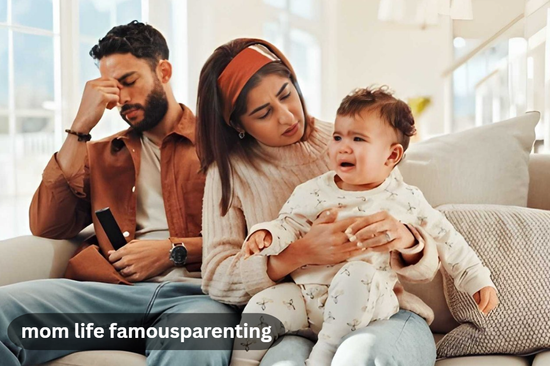
Working mom burnout shows up when paid hours, care hours, and recovery hours cannot occupy the same day. The response is a short list, not a personality overhaul.
How can a busy mother start without rebuilding the week?
Pick one 15-minute anchor that repeats daily, protect it like a pickup time, and add a second anchor only after seven consecutive days. Special time, a phone-down meal, or a same-hour lights-out cue all qualify. Consistency beats a Sunday reset that collapses by Wednesday.
- Name the day’s non-negotiables in three bullets before breakfast (meals, pickup, bedtime).
- Move one chore to a time when a child can help or when a partner is actually present.
- Use positive discipline in one conflict: name the feeling, state the limit, and offer a next step.
- Log one win that would never make a grid photo.
- Stop adding systems until the current one survives a sick day.
Mom’s guilt often spikes when a feed implies other houses run on unused energy. The counter is a written list of what got done, not a mood.
How should screens fit an ordinary family evening?
Build a household media plan that carves screen-free meals, bedrooms, and the hour before sleep, then judge leftover entertainment time by what it crowds out. Per the AAP Family Media Plan guidance on HealthyChildren (updated June 3, 2026) and the Digital Ecosystems, Children, and Adolescents policy statement, families set those zones instead of a single vintage two-hour rule.
Entertainment-minute ranges in that policy still vary by age and by school-related use. Quality, sleep, play, and talk outrank a universal cap. Phone-down dinners change the house faster than a child-only rule.
| Need | Performative feed version | Real-day version |
| Morning | Styled breakfast, timed to post | Clothes laid out the night before; one backup outfit in the bag |
| Discipline | A script delivered on camera | One calm limit, repeated; repair after the spike |
| Self-care | A spa hour that never happens | Ten minutes of sitting after lights-out, three nights a week |
| Community | Follower count | One text thread with two adults who know the child’s name |
| Screens | “Unplug” as a brand | Mealtime and bedroom as device-free zones, per AAP media-plan logic |
| Success | Aesthetic | Everyone fed, safe, and still speaking |
More household-day pieces sit in the Mom Life section. Writer standards sit on the About page. Corrections go through the Contact Us page.
When This Model Does Not Apply
The dual-earner, different-sex, two-full-time-job snapshot does not describe single mothers, same-sex parents Pew could not break out night-shift households or homes where a father is the primary daytime caregiver. Applying the 52 percent figure to those families misstates the evidence. Pew states outright that there were not enough same-sex couples in the sample to analyze separately.
Single mothers in the IWPR table still posted high substantial-caregiver hours (9.1 versus 9.4 for married mothers in that slice). There is often no second adult for a sick day, so “share the load” advice that assumes a co-parent is the wrong tool. Night-shift workers cannot treat a 6 p.m. dinner as a moral test. Move screen-free and special-time anchors to the hours the household actually shares.
Work-life balance for parents is a scheduling problem first. Flexibility at work, not motivational copy, decided who left the office for childcare in Pew’s 2026 dual-earner table.
Frequently Asked Questions
Is this the same as being a mom influencer?
No. A public audience is optional; being the trusted adult in a child’s life is the definition this phrase uses. Influencer work is a job with metrics. Household influence is a relationship. Mixing them adds pressure on top of hours already visible in diaries and in “who does more” answers. A mother who publishes nothing still meets the standard. A large following does not.
Why do so many U.S. mothers feel behind even when chores look “almost equal”?
Survey equality and diary hours are different instruments, and the mental tracking of a household is rarely itemized as a chore. Pew’s 40 percent “chores about equal” answer sits beside a 2.1-hour unpaid-care gap because care time is not the same list as dishes. Feeling behind tracks extra days on the Care-Gap Calendar, not one poll question.
How much extra unpaid care do mothers of younger children carry?
In the 2024 ATUS-based IWPR figures for parents of children under 13, the all-parent gap is 2.1 hours per day; for substantial caregivers it is 1.7 hours per day. Annualized, 2.1 hours is about 32 extra 24-hour days; 1.7 hours is about 26 extra 24-hour days. Use the pair that matches the population: all mothers of young children versus only those already providing substantial care.
Does this advice replace pediatric or mental health care?
No. Public parenting copy is reading material only, not a diagnosis, a custody plan, or a treatment protocol for any family. Sleep collapse, depression, developmental concerns, and safety issues belong with licensed clinicians who have examined the child and the caregiver. If a clinician’s plan conflicts with a webpage, the clinic wins.
What should a mother do in the first week?
Protect one daily 15-minute connection block, one device-free meal, and one written win, then stop adding extra programs that week. Measure success by whether those three survived, not by whether the house looked postable. After seven days, add one chore handoff or one sick-day backup adult if one exists.
Is the 2026 Pew number a national average for all moms?
No. The 52 percent “mom does more parenting” statistic is for married or cohabiting different-sex couples in which both parents work full time. Searches for mom life and famousparenting still pull that headline; the sample is not all U.S. mothers, all working mothers, or every household type. Quoting it as a universal share is a scope error.
Conclusion
Mom life famousparenting is the decision to treat ordinary U.S. care work as the main story and to build trust at home on purpose. The 2026 Pew perception splits and the 2024 care-hour diaries agree on direction—mothers still carry more—while measuring different things; the Care-Gap Calendar translates the diary difference into about a month of extra 24-hour days a year. Use short anchors, name the household type that actually matches the data, and keep the parent, not the feed, as the influence that counts.